Equestrian Wellington
Equestrian properties in Wellington
In Wellington, horse country isn’t a figure of speech. It’s a zoning district.
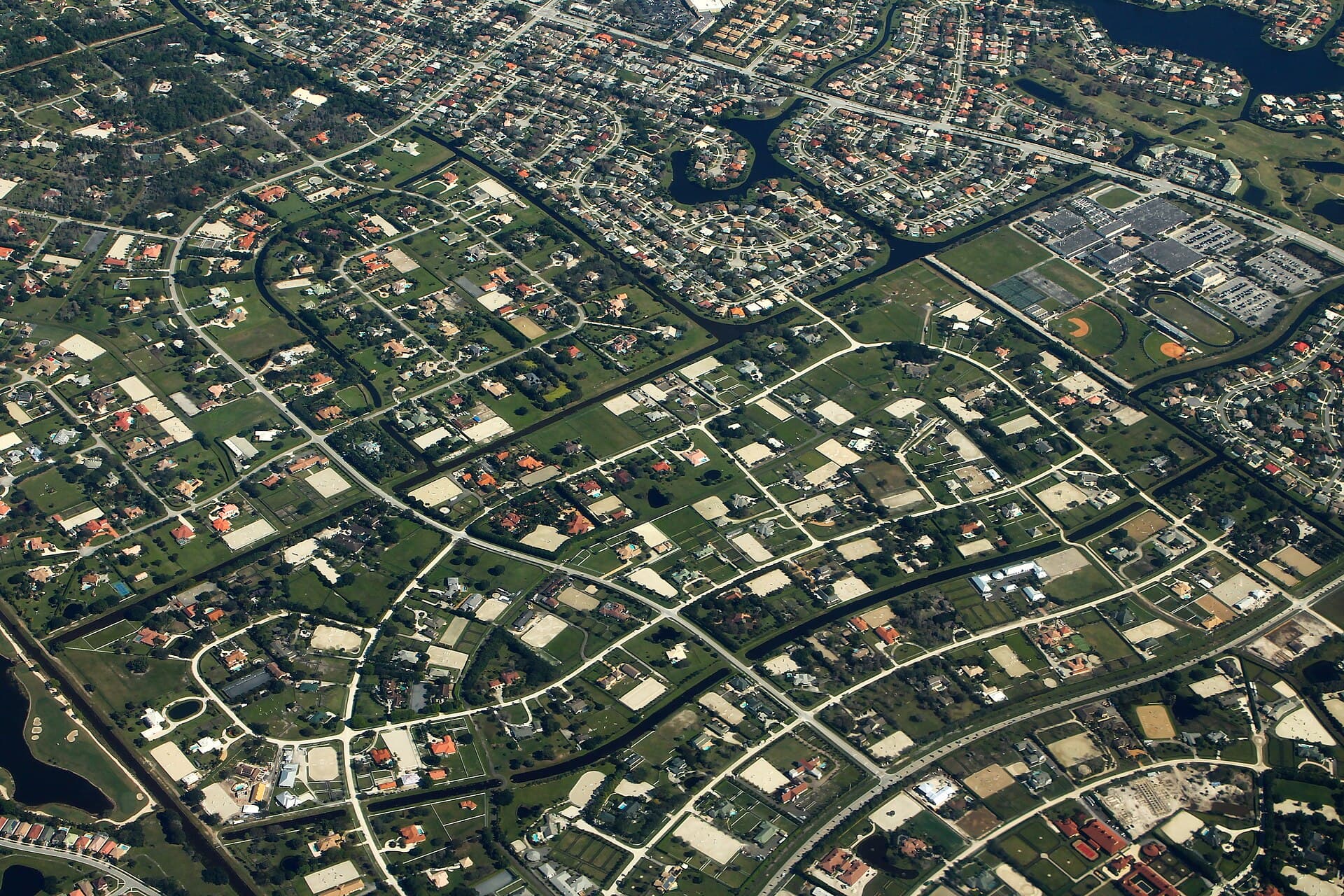
The Village describes an equestrian community of about 9,000 acres in the western and southern parts of Wellington, with polo, dressage and hunter/jumper venues alongside family farms. If you’re looking at a property with a barn, a paddock or a place to ride out, the rules, the calendar and the map all work a little differently here, and I’d rather you understand them before you fall for a property than after.
This guide covers what the Equestrian Preserve is, how the season shapes the year, why the zoning rules are a moving target right now, and what I look at in any equestrian property. For estates beyond the preserve, see Luxury Residences.
Updated September 27, 2026.
The preserve
The Equestrian Preserve Area
The Equestrian Preserve Area is mapped on Wellington’s Future Land Use Map, and development inside it is regulated by the Equestrian Overlay Zoning District in the Village’s Land Development Regulations. The Village Council adopted the overlay in 2003. It has six sub-areas:
- Sub-area A
- Palm Beach Little Ranches
- Sub-area B
- Paddock Park / Saddle Trail · Saddle Trail Park guide
- Sub-area C
- Palm Beach Point / Orange Point · Palm Beach Point guide
- Sub-area D
- Wellington Country Place / The Equestrian Club · Grand Prix Village guide
- Sub-area E
- Rustic Ranches
- Sub-area F
- Winding Trails
A seven-member Equestrian Preserve Committee advises the Planning, Zoning and Adjustment Board and the Village Council on protecting equestrian land, rider and animal safety, drainage and capital projects. It meets on the first Wednesday of each month.
Since 1999 the Village has established and maintained more than 100 miles of public and private bridle trails, funded through its annual Capital Improvement Plan.
The season
From January into May, the season sets the pace.
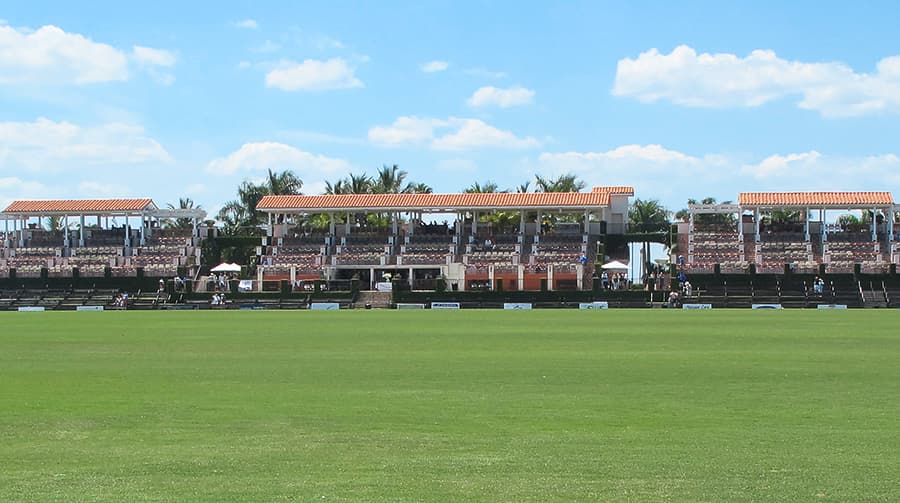
Pictured: the polo stadium at the National Polo Center, Wellington
Wellington International
The former Palm Beach International Equestrian Center took the name Wellington International in March 2022. It’s at 3400 Equestrian Club Drive, and a 2024 release described it as more than 111 acres with 18 competition arenas.
Winter Equestrian Festival
The 2027 festival opens with Premiere Week on January 6–10, 2027, and runs January through late March. Daytime general admission is free Wednesday through Sunday, according to the official schedule.
Global Dressage Festival
Eight weeks, January 13 to March 7, 2027. The festival’s schedule lists Equestrian Village at 13500 South Shore Boulevard.
Polo
In June 2022 the United States Polo Association bought International Polo Club Palm Beach, all 161 acres, and renamed it the USPA National Polo Center–Wellington. Its 2026 winter season ran from late December into early May, according to the Town-Crier, with the USPA Gold Cup in March and the U.S. Open Polo Championship in April.
The Village’s map of major equine destinations also lists Equestrian Village, Gulfstream Polo, the Polo Museum, Jim Brandon Equestrian Center and Grand Champions Polo Club; not all of them are inside Village limits.
Zoning
Rules in motion
As of September 27, 2026
This is the part I most want you to read. Wellington’s current Land Development Regulations were adopted by Ordinance 2020-01, effective January 13, 2020, and are hosted on Municode, but the Village notes that some amendments aren’t reflected there yet; Ordinance 2026-11, approved July 28, 2026, is one example.
On January 21, 2026, according to a published meeting summary, the Village’s Planning, Zoning and Adjustment Board postponed a text amendment to remove LDR §6.8.8, the cluster and equestrian PUD standards, while state Senate Bill 180 was pending.
What that means for you: the overlay’s rules on lot sizes, stalls and barn placement are under active revision, so I don’t publish them, and you shouldn’t rely on anyone’s summary, including an old listing’s. The one figure on this site is Palm Beach Point’s 5-acre minimum lot size, and that comes from its own association. Start with the Village’s Land Development Regulations page.
Seasonal rentals
Show-season rentals
Renting a property for the season, or renting one out? In Palm Beach County, rentals of six months or less owe the county’s 6% Tourist Development Tax plus state sales tax, and the landlord must register a Tourist Development Tax account.
Wellington also requires a Vacation Rental Permit, $600 per unit, for rentals offered more than three times a year for less than 30 days (Ordinance 2023-13, effective March 1, 2024), together with a Business Tax Receipt. Every residential rental in the Village needs a Business Tax Receipt, whatever its length.
Where
Neighborhoods in the preserve
Gated · Equestrian · Sub-area C
Palm Beach Point
A gated equestrian community of more than 800 acres inside Wellington’s Equestrian Preserve, where the association sets a 5-acre minimum lot size.
No HOA · Not gated · Sub-area B
Saddle Trail Park
An equestrian neighborhood with no HOA and no gate, named in the Village’s own definition of Sub-area B of the Equestrian Preserve.
Gated · Equestrian · Sub-area D
Grand Prix Village
A compact, gated equestrian enclave fully inside Sub-area D of Wellington’s Equestrian Preserve, with two associations of its own.
Other neighborhoods inside the preserve, according to the Village’s map data: Paddock Park II (Sub-area B), Rustic Ranches (Sub-area E, with its own Rustic Ranches Overlay District), Palm Beach Little Ranches (Sub-area A, about 92 percent inside, with its own overlay), and the Equestrian Club, Mallet Hill and Southfields (all Sub-area D). Palm Beach Polo & Country Club is about 2 percent inside, through its Mallet Hill and Southfields sections, and the Aero Club borders Sub-area C from outside.
Before you buy
What I look at in an equestrian property
Is it in the preserve, and which sub-area?
I confirm it on the Village’s own Equestrian Preserve and sub-area map layers, not a listing description.
What the rules are today
Because the overlay is being revised, I check the current requirements with the Village for the specific property before you commit, and we plan around what the Village says, not what a previous owner did.
Association or no association
Some equestrian neighborhoods have a gated association and some have none; the Village’s data shows no HOA in Saddle Trail Park, Paddock Park and Rustic Ranches. Where there is an HOA, Florida law requires the disclosure summary before the contract is signed (s. 720.401).
Assessments on the tax bill
Non-ad valorem assessments can apply by neighborhood. Part of Saddle Trail Park, for example, repays a 2016 improvement bond through a Village assessment. I read the tax bill line by line.
Manure storage and drainage
Village Code Sec. 9-41 requires manure bins to be containerized, covered and built to prevent stormwater discharge, sized by the number of horses. Worth checking before closing, not after.
Flood zone and a storm plan
The Village issues a free Flood Zone Determination letter for any property in Village limits. For the horses, the Village’s guidance is 12 to 20 gallons of water per horse per day, at least 72 hours of feed and hay (seven days is best), evacuation 48 hours before hurricane-force winds, and a negative Coggins test to use a community shelter or cross state lines.
Journal
Related reading
Communities
The Two Wellingtons: HOA Neighborhoods and the Equestrian Preserve
Wellington is one village with two ways of living: deed-restricted HOA neighborhoods and the Equestrian Preserve. How to tell which one you're picturing.
Living in Palm Beach County
Show Season in Wellington: What Buyers and Renters Should Know Before January
Wellington's winter show season, from the Winter Equestrian Festival to Sunday polo, and what it means for buyers, seasonal renters and landlords.
Private consultation
Tell me what the horses need and what you need, and I’ll come back to you personally and discreetly.
Sources
Wellington International’s size comes from a 2024 release and the 2026 polo season from local press; both are single sources, re-checked on the date above. Lot-size and stall rules are intentionally not published while the Village revises them.
- Village of Wellington FAQs: Equestrian
- Village of Wellington Official Zoning Map, Ordinance 2025-01, Exhibit B
- Village of Wellington GIS: Equestrian Preserve Area
- Village of Wellington GIS: Equestrian Overlay Zoning District sub-areas
- Village of Wellington GIS: Major Equine Destinations layer
- Village of Wellington: Equestrian Preserve Committee
- Village of Wellington: Land Development Regulations
- Citizen Portal: Wellington board pauses Equestrian Overlay text amendment (Jan 21, 2026)
- Chronicle of the Horse: PBIEC rebrands as Wellington International (Mar 2022)
- Tryon: Wellington International acquisition release (Oct 22, 2024)
- Wellington International: Winter Equestrian Festival schedule
- Wellington International: Global Dressage Festival schedule
- WFLX: International Polo Club Palm Beach sold (June 2022)
- Town-Crier: National Polo Center 2026 winter season schedule (Sept 2025)
- Palm Beach County Tax Collector: Tourist Development Tax
- Village of Wellington: Vacation Rentals
- Village of Wellington: Rental Properties
- Village of Wellington: Equestrian Hurricane Information
- Florida Statutes s. 720.401 (HOA disclosure summary)
- Village of Wellington: Flood Zone Determination
- Acme Improvement District: Notices
- Palm Beach Point POA
- Village of Wellington GIS: Neighborhoods layer
- Village of Wellington GIS: Homeowner Associations layer (name and gated status)
All sources viewed September 27, 2026.